The outbreak is exposing the breadth of dangers the disease can pose. South Carolina’s state epidemiologist revealed on February 4 that cases of brain swelling, a rare complication of the disease, had emerged in some infected children, according to Wired magazine.
Some signs suggest that this outbreak may be waning. But many public health scholars worry that the resurgence of measles across the U.S. and worldwide, driven by a drop in vaccination rates, may signal a coming wave of other vaccine-preventable diseases
The Conversation U.S. compiled a set of five stories from our archives to help readers gauge both practical considerations around vaccination and the bigger picture of what the return of measles might mean for public health.
1. A measles vaccine primer
Measles is one of the most contagious human diseases on the planet – much more contagious than more familiar infectious illnesses such as flu, COVID-19 and chickenpox. But the vaccine, which is given as a two-dose regimen, is 97% effective in preventing measles infection, wrote Daniel Pastula, a neurologist and medical epidemiologist at the University of Colorado Anschutz Medical Campus.
Most people born after 1957 have received the vaccine as children. A striking – though unsurprising – feature of the South Carolina outbreak is that at least 800 of the reported cases occurred in people who weren’t vaccinated.
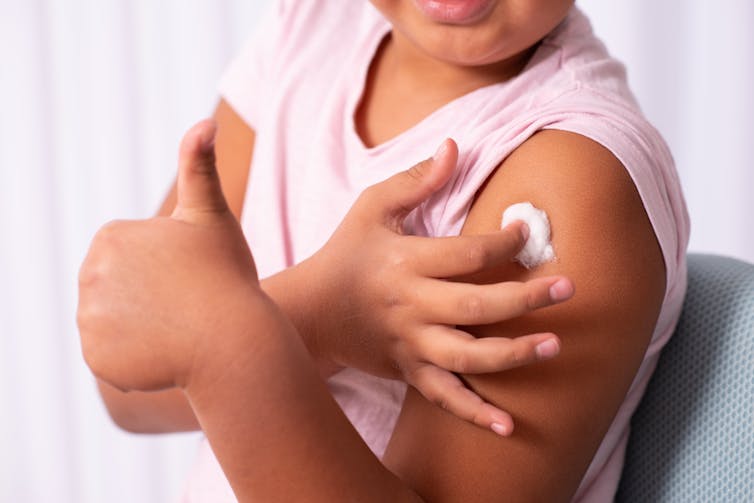 The measles vaccine is so effective that many doctors practicing today have never seen a case of the disease. RuslanDashinsky/E+ via Getty Images
For those worried about the risks and wondering how to protect themselves, Pastula offered some essential practical guidance.
“The immunity from a vaccine is effectively the same immunity you get from having measles itself – but vastly safer than encountering the wild virus unprotected,” Pastula explained. “The point of vaccines is to create immunity without the risks of severe infection. It is basically a dress rehearsal for the real thing.”
2. Long-term consequences
Most people who contract measles will experience 10-14 days of a high fever, cold-like symptoms, eye inflammation, and a rash that starts on the face and spreads across the body. Because the infection usually resolves on its own, it’s easy to dismiss the fact that it can have severe consequences.
“What generally lands people with measles in the hospital is the disease’s effects on the lungs,” wrote Peter Kasson, a biologist studying viruses at the Georgia Institute of Technology, in an article explaining the near- and long-term risks of infection.
Dr. David Higgins explains why measles is not to be taken lightly.
Perhaps the most terrifying is a condition called subacute sclerosing panencephalitis, or SSPE, in which the virus lies dormant in the brain of someone who recovered from a measles infection and reawakens 7-10 years later to cause “a progressive dementia that is almost always fatal,” Kasson wrote.
This outcome is rare, but it does happen. The Los Angeles County Public Health Department reported a case in September 2025.
3. What’s at stake
A common adage in public health is that vaccines are often victims of their own success. That’s particularly true for the measles vaccine – because it’s so effective, many doctors and nurses practicing today have never seen a case.
Infectious disease pediatrician Rebecca Schein at Michigan State University explored recent modeling studies that predict the trajectory of measles infection rates. One 2025 study she described found that the U.S. is on track to see 850,000 cases over the next 25 years at current vaccination rates.
“If vaccine rates decrease further, the study found, case numbers could increase to 11 million over the next 25 years,” she wrote.
That scenario is not a foregone conclusion, of course. Another study suggested that outbreaks could be contained if they’re stopped quickly – as long as 85% of the population is vaccinated against the disease.
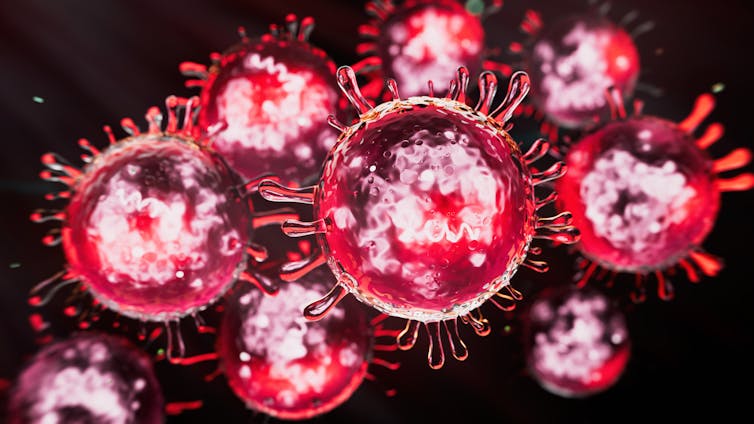 Measles is among the most contagious diseases worldwide. koto_feja/iSotck via Getty Images Plus
4. Why do some parents opt out of vaccines?
Much ink, digital and otherwise, has been spilled discussing the rise of vaccine hesitancy in the U.S. and globally. However, a safe assumption is that parents worldwide want the same thing: to keep their children as healthy as possible.
To explain how parents might reasonably weigh the risks posed by vaccines and the risks posed by a disease like measles and decide not to vaccinate, public policy expert Y. Tony Yang and health economist Avi Dor at George Washington University invoked a mathematical framework called “game theory”.
“Game theory reveals that vaccine hesitancy is not a moral failure, but simply the predictable outcome of a system in which individual and collective incentives aren’t properly aligned,” they wrote.
5. Measles-free status
Measles is said to be eliminated from a country after at least 12 months in which there’s minimal spread of the disease internally and only small outbreaks linked to international travel.
The World Health Organization announced on Jan. 26 that the U.K. and five other European countries lost their measles elimination status, according to Reuters. And the organization’s Pan American office issued an alert on Feb. 3, noting the alarming spread of the disease across North, Central, and South America.
In November 2025, when Canada lost its measles elimination status, global health epidemiologist Kathryn H. Jacobsen at the University of Richmond noted that the U.S. would likely lose its measles elimination status in 2026, along with Mexico.
Jacobsen explained why this designation is so important for public health.
“The loss of measles elimination status is a symptom of a deeper issue: declining trust in public messaging about science and health, which has led to decreased vaccination rates and growing vulnerability to vaccine-preventable diseases,” she wrote.
Key Points:
- The South Carolina outbreak has reached 876 cases, the largest U.S. outbreak since measles was declared eliminated
- Measles spreads more easily than flu, COVID-19, or chickenpox
- The two-dose vaccine is 97% effective at preventing infection
- Most severe cases occur among unvaccinated individuals
- Experts warn declining vaccination rates could lead to major nationwide resurgences
This article is republished from The Conversation under a Creative Commons license.