From the Florida Department of Health in Orange County
With the heat index reaching 100 degrees this week in Central Florida, the Florida Department of Health in Orange County wanted to provide the public with tips to prevent heat stroke and heat exhaustion.
- Stay Hydrated – Drink more water than usual. Don’t wait until you’re thirsty!
- Those at high risk for heat-related illness – the very young and very old and people with chronic medical conditions – should stay in an air-conditioned environment. If you don’t have air conditioning, go to the shopping mall or a public library.
- If you need to work outside, take frequent breaks. Stay cool. Pace yourself while working or exercising in hot weather.
- Do not leave children or pets in parked cars, even if the windows are cracked open. Cars can quickly heat up to dangerous temperatures.
- Protect your skin. Use sunscreen with a SPF 15 or higher.
- Cover up with a wide-brimmed hat. Wear lightweight and light-colored clothing.
- Leave your pets plenty of water in shady areas.
- Check your local news for extreme heat alerts and safety tips.
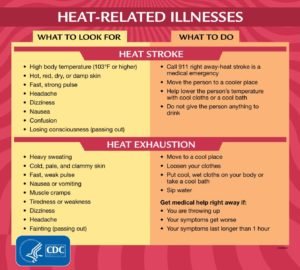
Heat Stroke
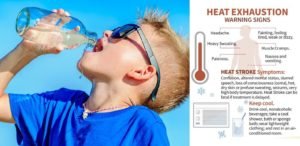
Symptoms of heat stroke include extremely high body temperature above 103ºF or higher, hot, red, dry or damp skin, no sweating, hallucinations, chills, throbbing headache, confusion/dizziness and/or slurred speech.
What to do for Heat Stroke:
 Heat Exhaustion
Symptoms of heat exhaustion include heavy sweating, extreme weakness or fatigue, dizziness/confusion, nausea, cold clammy/moist skin, pale or flushed complexion, muscle cramps, slightly elevated body temperature and fast/shallow breathing.
What to do for Heat Exhaustion:
Get medical help right away if:
• You are throwing up
• Your symptoms get worse
• Your symptoms last longer than 1 hour
The Florida Department of Health, nationally accredited by the Public Health Accreditation Board, works to protect, promote, and improve the health of all people in Florida through integrated state, county, and community efforts.